Choosing the wrong eCommerce platform can cost you months of work and thousands of dollars in lost sales. Yet most store owners pick their platform in an afternoon, based on a YouTube video or a friend's recommendation.
If you're stuck deciding between Shopify and WooCommerce, you're asking the right question at the right time before you build, not after you've outgrown your platform.
In this guide, we'll break down exactly how these two platforms differ, who each one is actually built for, and how to make the choice with confidence (not guesswork).
Shopify vs WooCommerce: The Core Difference
Before comparing features, it helps to understand what each platform actually is.
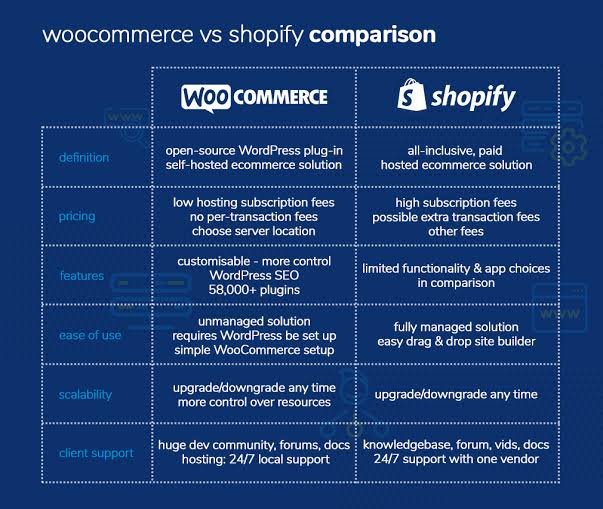
Shopify is a fully-hosted, all-in-one eCommerce platform. You sign up, pick a plan, and Shopify handles hosting, security, and updates for you.
WooCommerce is a free plugin that turns a WordPress website into an online store. You manage your own hosting, security, and updates — or pay someone else to.
That one difference — hosted vs. self-hosted — is the root of almost every other difference on this list.
Ease of Use
Shopify is built for store owners, not developers. You can launch a fully functional store in a day, without touching code.
WooCommerce requires more setup. You'll need to choose hosting, install WordPress, configure the plugin, and often hire a developer to get things looking and working right.
If your team doesn't have technical resources in-house, this gap matters a lot more than it seems at first glance.
Cost: What You're Really Paying For
This is where most store owners get surprised. WooCommerce is marketed as "free," but free is rarely the full story.
| Cost Factor | Shopify | WooCommerce |
|---|---|---|
| Platform cost | Monthly subscription | Free plugin |
| Hosting | Included | You pay separately |
| Security/SSL | Included | You manage it |
| Updates | Automatic | Manual or developer-managed |
| Apps/Plugins | Paid, but stable | Often free, but conflict-prone |
| Developer help | Optional | Frequently required |
The real comparison isn't "free vs. paid" — it's predictable monthly cost vs. variable cost that depends on your technical comfort level.
A small WooCommerce store might genuinely cost less. But once you add premium plugins, security monitoring, hosting upgrades, and developer time for fixes, many businesses end up paying more than Shopify — with more headaches along the way.
Speed and Performance
Site speed directly affects your conversion rate — and Google's rankings.
- Shopify runs on a global content delivery network (CDN) and is optimized for speed out of the box.
- WooCommerce speed depends entirely on your hosting quality, plugin count, and theme code.
A poorly optimized WooCommerce store with too many plugins can slow to a crawl. A well-built one, on solid hosting, can perform great — but that takes ongoing technical maintenance most store owners don't have time for.
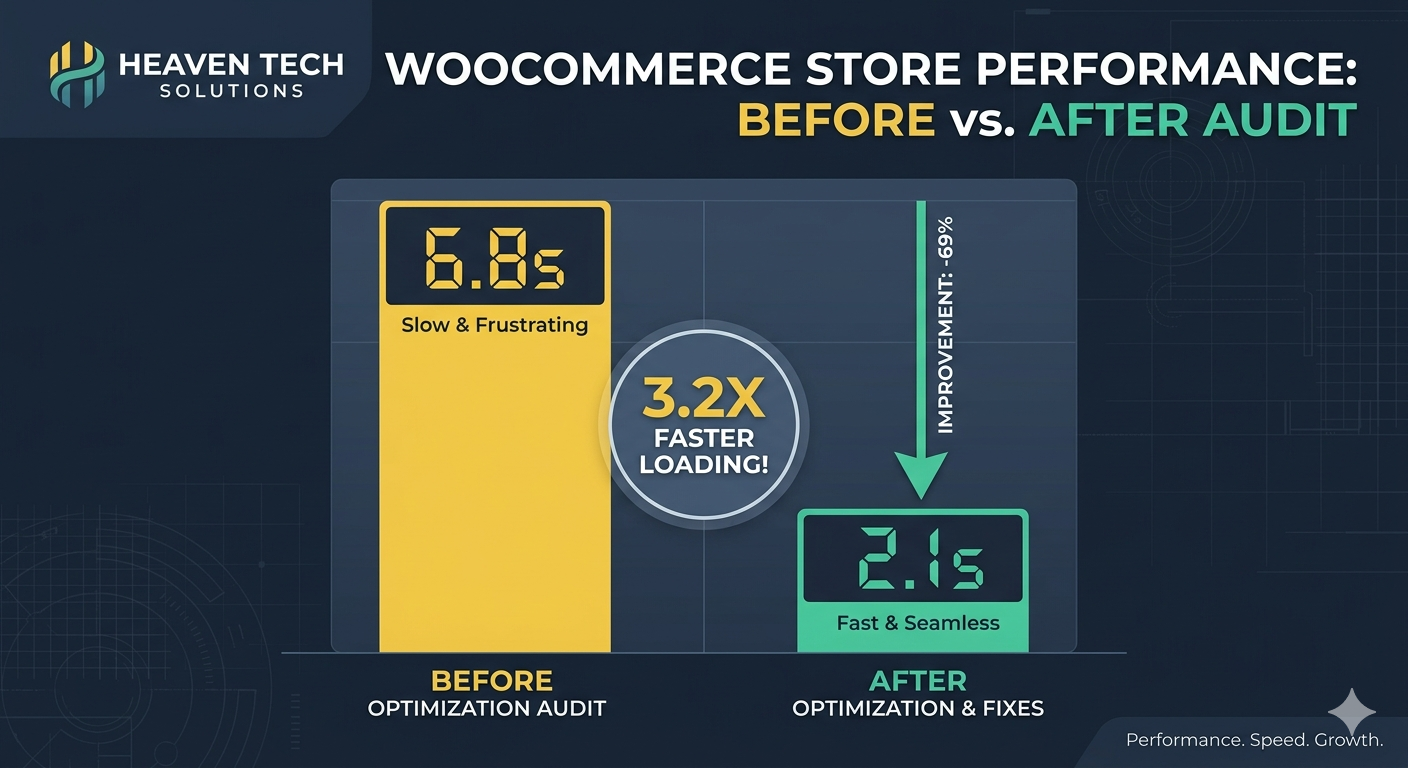
Mini case study: We recently audited a WooCommerce fashion store loading in 6.8 seconds. After identifying three conflicting plugins and unoptimized images, load time dropped to 2.1 seconds — and their add-to-cart rate improved by 22% within three weeks. This is exactly the kind of issue our free store audit catches.
Security and Maintenance
- Shopify handles PCI compliance, SSL, and security patches automatically. You don't think about it — it's just done.
- WooCommerce puts security in your hands. WordPress sites are a common target for hackers, and outdated plugins are the #1 entry point.
If "I don't want to think about security" describes you, that alone may answer this question.
Customization and Flexibility
This is WooCommerce's strongest argument. Because it's built on WordPress, you have near-unlimited control over code, design, and functionality.
Shopify is more structured. You customize through its theme system and apps, using Liquid, Shopify's templating language.
Here's a simple example of how Shopify's Liquid code lets you customize a store — in this case, showing a "Low Stock" badge automatically:
{% if product.selected_or_first_available_variant.inventory_quantity <= 5 %}
  <span class="low-stock-badge">
    Only {{ product.selected_or_first_available_variant.inventory_quantity }} left!
  </span>
{% endif %}
This kind of small, conversion-focused tweak is something a Shopify developer can add in minutes — no need to rebuild your whole theme.
The honest take: WooCommerce offers more raw flexibility. Shopify offers more flexibility per hour of effort spent because the platform handles the technical foundation for you.
Apps, Plugins, and Scaling
- Shopify's App Store is curated and tightly integrated, so apps tend to "just work" together.
- WordPress's plugin library is larger and more open, but plugin conflicts are common — especially as your store grows.
For store owners planning to scale fast (more products, more traffic, more channels), Shopify's structure tends to hold up better under pressure. We cover this in more depth in another Heaven Tech guide on preparing your Shopify store for high-traffic sales events.
Which One Should You Choose?
Here's the simplest way to decide:
Choose Shopify if you:
- Want to launch quickly without hiring a developer for setup
- Prefer predictable monthly costs
- Don't want to manage hosting or security
- Plan to scale and need a stable, reliable foundation
Choose WooCommerce if you:
- Already have a WordPress site with content/SEO equity
- Have in-house development resources (or budget for ongoing help)
- Need deep, highly specific customization, WordPress plugins don't offer it elsewhere
- Are comfortable managing technical maintenance long-term
Final Thoughts
There's no universally "better" platform — only the better platform for your business, your team, and your goals.
If speed, simplicity, and predictable growth matter most to you, Shopify is usually the stronger long-term choice for store owners who'd rather focus on selling than managing servers. If you need deep custom functionality and already have development support, WooCommerce can still make sense.
Not sure which fits your situation? That's exactly what we help store owners figure out every week.
Get a free Shopify store audit from Heaven Tech Solutions — we'll review your current setup (or your plans to launch) and give you honest, practical recommendations. No pressure, no sales pitch. Just clarity.
Comments (0)
Leave a comment